
Dam Difficult Work
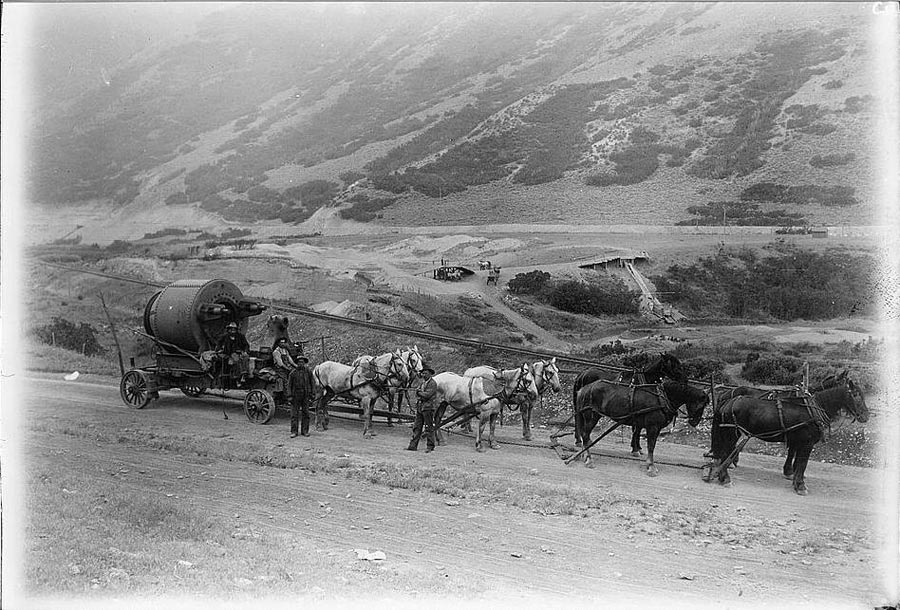
In the early days of hydroelectricity, when facilities typically were relatively small, teams of draft animals often transported materials and equipment to dam construction sites. For example, shown here are a turbine and generator unit being delivered in 1908 by horse-drawn wagon to the powerhouse of the Bureau of Reclamation’s first hydroelectric project to deliver power commercially, the Strawberry Valley Project in Utah. As the years passed and hydroelectric facilities became larger and larger, this became increasingly difficult.
Source: Library of Congress
Source: Calisphere
Source: Library of Congress
Dam construction was very labor intensive, grueling work. Well into the twentieth century, the hand shovel remained the primary earthmoving machine, and construction materials were moved at the construction site by draft animals or human power. The full-swing, 360° revolving steam shovel was developed in 1884, eventually becoming a workhorse for dam construction and easing the load for laborers and draft animals. As previously mentioned, trucks and other motor-powered heavy equipment did not come into common use until the 1930s.
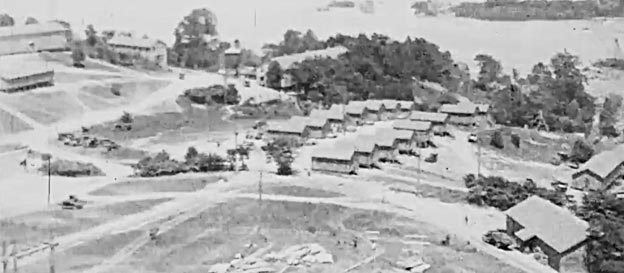
Due to the remote location of most dam construction projects, workers almost never could commute to the work site daily. Construction villages were erected on site by construction contractors, often surrounded by unplanned tent encampments. Thousands of workers toiled on some of these projects and lived in construction villages that were, in effect, full-fledged towns, complete with dormitories and houses for workers, police and fire departments, water treatment and sewage disposal systems, cafeterias, medical treatment facilities, schools, community centers, and recreation facilities. For the construction of Conowingo Dam on the lower Susquehanna River, a construction village was built in 1926 to house a labor force of 3,800 men. When completed, the Conowingo powerplant was the second largest in the world and supplied much needed electricity to nearby Philadelphia. Here is a partial view of the Conowingo Dam construction village:
Source: Stone & Webster
Feeding the labor force at these construction villages was a gargantuan task. For example, as the TVA was constructing Fontana Dam in the wilderness of the Great Smoky Mountains, peak employment reached about 5,000 workers. The cafeteria, which seated approximately 1,000 people at one time, served 7,000 meals and packed 2,000 lunches per day during this period.
In these pre-OSHA days, dam construction was exceedingly dangerous work (the Occupational Safety and Health Administration was not formed until 1971). The prevailing working conditions would be unthinkable today. Early versions of hard hats were introduced just after World War I, but the first construction project requiring workers to wear hard hats was the building of Hoover Dam in 1931.
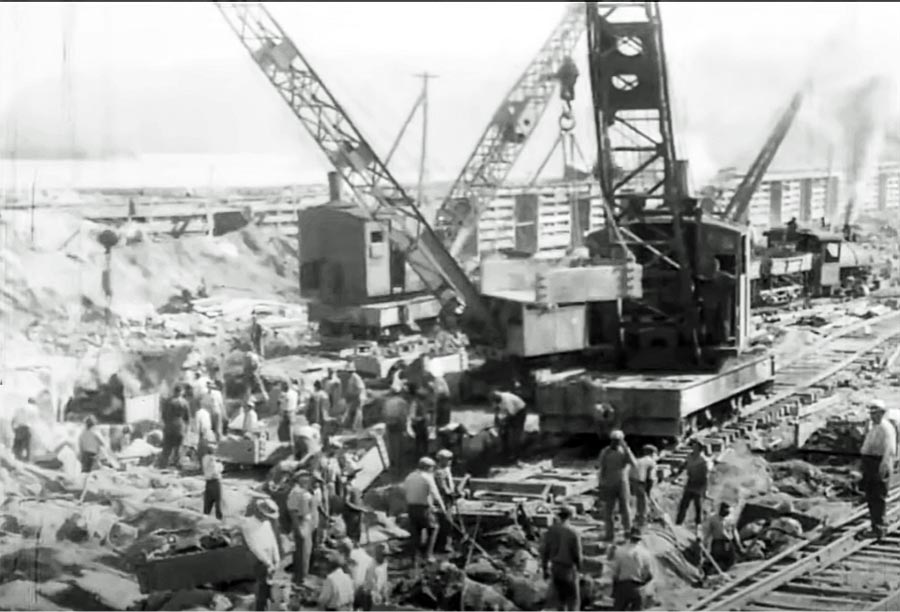
Shown here are workers building Conowingo Dam. Note the crowded conditions, men standing below heavy timbers dangling over their heads, and the complete lack of protective gear. Although no official records were kept of injuries or deaths during construction, the deaths of sixteen laborers have been confirmed.
Source: Stone & Webster
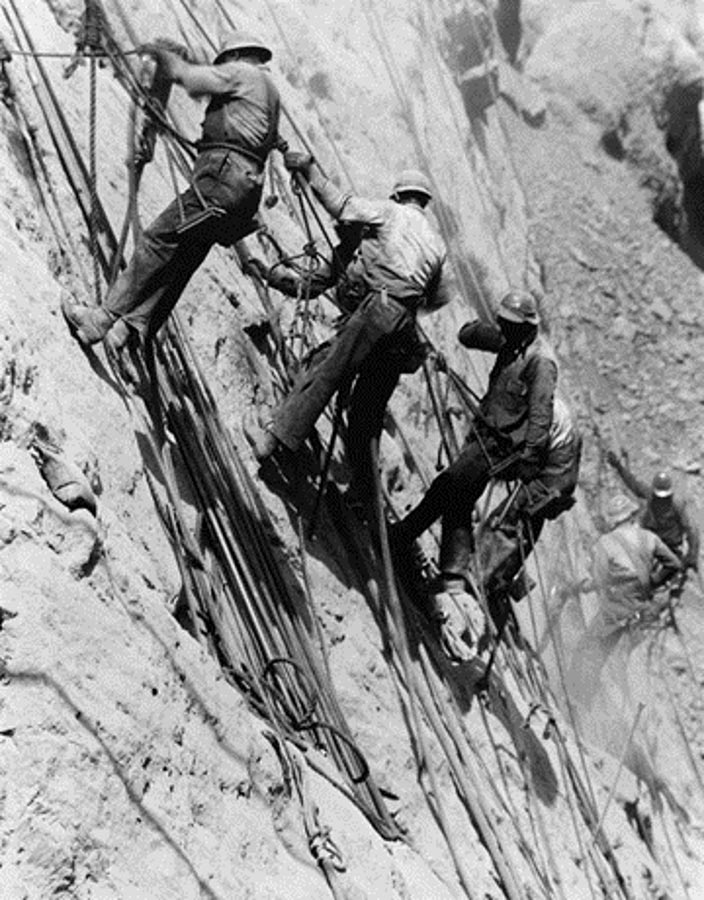
Building Hoover Dam was exceedingly complex. Construction superintendent Frank Crowe observed, “We had 5,000 men in a 4,000-foot canyon. The problem was to set up the sequence of jobs so the workers wouldn’t kill each other off.” To groom the tall canyon walls abutting the dam, high scalers suspended from long ropes brandished 44-pound jackhammers to clear the walls of debris. 98 high scalers were killed doing this treacherous work. Overall, at least 200 men died during the dam’s construction, including a number from heat prostration and carbon monoxide poisoning while the diversion tunnels were being bored.
Source: Bureau of Reclamation
Source: Stone & Webster
Source: Mississippi River Power Company
All in all, building the dams that restructured our landscape and electrified America was an amazing feat. The work was difficult and dangerous, but men flocked to the opportunity, wanting to be part of something big, something that mattered. The engineers crafting various hydroelectric projects often received little public attention. Also lacking public attention were the hundreds of thousands of workers who actually built the dams and toiled namelessly. Most of them remain faceless in the pages of history. Yet the public has long marveled at their achievements.
May 14, 2026